North Carolina Financial Planning Seminar Promotes Mindful Money Management
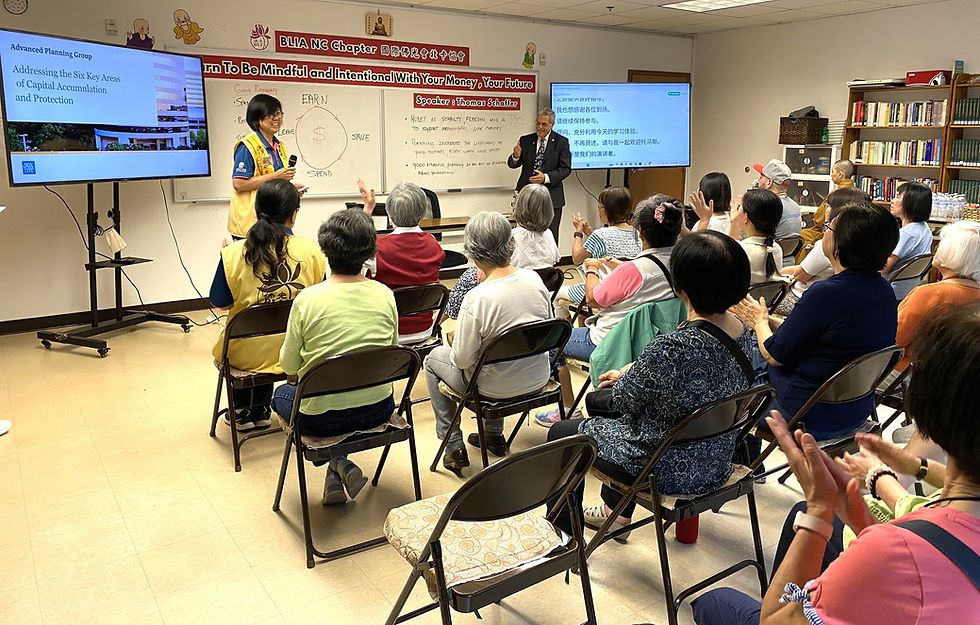
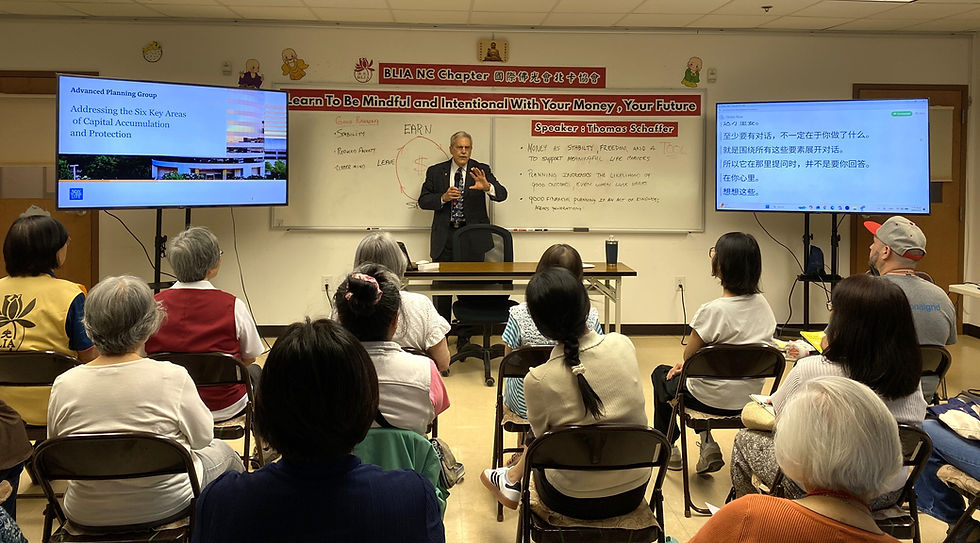
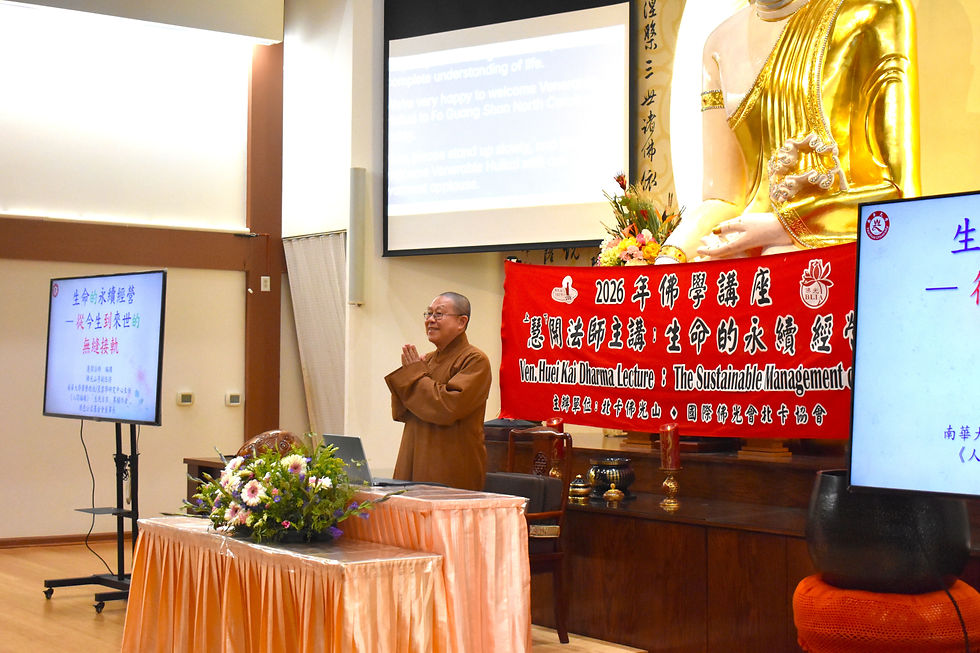
[Reported by Wang Yiwen, North Carolina, USA] To enhance financial awareness in the community, the Buddha's Light International Association North Carolina Association, First Subchapter, held a Life Education Seminar on Financial Planning on April 25, 2026, at Fo Guang Shan Buddhist Temple, North Carolina. The event featured New York Life financial advisor Thomas Schaffer as keynote speaker, with live Chinese subtitles provided. Around 30 community members attended.
The seminar focused on essential elements of financial planning, helping participants better understand investing, money management, and long-term planning in a more organized way. It also encouraged attendees to manage money and their future with mindfulness and clear goals.
Thomas Schaffer, a native of New York, studied marketing and economics and later pursued further studies in finance. He spent 22 years in international business at IBM before launching his own business and working for many years in financial planning and investment management. Since becoming connected with Fo Guang Shan Buddhist Temple, North Carolina last year, he has frequently joined cultivation activities and volunteered at the temple.
In her opening remarks, Buddha’s Light International Association (BLIA) North Carolina Chapter President Gee Chia said that financial planning is not only about managing numbers, but also about inner peace and preparing for the future. She emphasized that life goals should be guided by clear direction, and that wise and mindful financial management can help people build security and confidence. She expressed hope that the seminar would provide practical insights and concrete guidance for steady life development.
During the seminar, Thomas systematically explained six key areas of financial planning: income protection, tax planning, capital growth, asset protection, retirement planning, and estate planning. He stressed that money should be viewed through the Buddhist principle of the Middle Way—as a tool rather than an end.
He noted that sound financial planning helps people remain stable, reduce anxiety, and cultivate a calm and clear state of mind. Planning, he said, is not merely paperwork, but a process of reflection and dialogue that helps individuals analyze opportunities and risks while clarifying life goals.
Thomas also shared the value of working with professionals, noting that advisors are less influenced by emotion, willing to ask important difficult questions, and able to offer objective guidance—demonstrating the true role of a financial consultant.
The seminar concluded with lively audience interaction. Participants raised questions on topics including asset protection strategies, conversions between Traditional IRA and Roth IRA and their tax implications, the difference between earned and passive income, and distinctions between wills and trusts. Thomas provided clear and professional responses.
Participant Samuel Edison said the seminar helped him become more intentional about directing his finances, prepare earlier, and reduce anxiety, while also learning ways to cope with stress and seek support. Another attendee, Chao Ya-hui, shared that the seminar inspired deeper reflection on financial planning and the importance of starting early and planning for the long term. Through systematic planning, she said, people can build a solid foundation for a more secure, peaceful, and fulfilling future.
BLIA North Carolina Vice President Zhang Yin served as the emcee, introducing the keynote speaker. BLIA member Zhuoli Huang provided translation support during the Q&A session.